Project Overview
Problem Statement
- No user testing before launch.
- No competitor research done.
- No clear layout or user flow.

Goals & Objectives
- Improve user experience.
- Test usability before launch.
- Build clear structure.

Solution
- Conducted user testing.
- Researched competitors.
- Created wireframes and prototypes.
Key Responsibilities
1
Research
- Competitor analysis
- UX pattern review
2
Analyse
- Layout evaluation
- Usability checks
- Gap identification
3
Prototype
- Wireframe creation
- Flow mapping
- User testing
4
Design
- UI layout
- Prototype refinement
User Testing
User Experience Evaluation
Pre-Launch
- Nav
- Responsive
- Buttons
- Usability
- Devices
- Sections
- Review
Why
To validate design decisions early and ensure smooth user experience.
When
During early and mid-stages before finalizing designs.
Where
Remote sessions and controlled environments.
What
Low- to mid-fidelity prototypes for usability testing.
How
Lean testing with moderated usability sessions and heuristic evaluation.
User Testing
For Top Creative, user testing was integrated to ensure the website delivered a seamless experience. Tests were conducted remotely and in controlled environments (Where) at early and mid-stages (When). Low- to mid-fidelity prototypes (What) were used to gather feedback. The goal (Why) was to validate design decisions and uncover usability issues. Lean methods, including moderated sessions and heuristic evaluation (How), informed refinements in layout, interactions, and visual hierarchy for a polished, user-friendly final experience.
Competitive Research
Who
Top Creative team and a few target users for feedback.
What
Reviewed competitor websites for layout, content, and marketing strategy.
When
Conducted during initial discovery to guide design direction.
Where
Online research across top marketing and creative agencies.
Why & How
To identify best practices, gaps, and opportunities using manual analysis.
Competitive Research
For Top Creative, competitive research focused on five top marketing agencies (What) to guide website strategy (Why). The review analyzed layouts, content hierarchy, CTAs, and visual trends (How). Research occurred in the discovery phase (When) and was performed online (Where), ensuring our design was aligned with industry best practices and user expectations (Who).
Wireframes
Wireframes
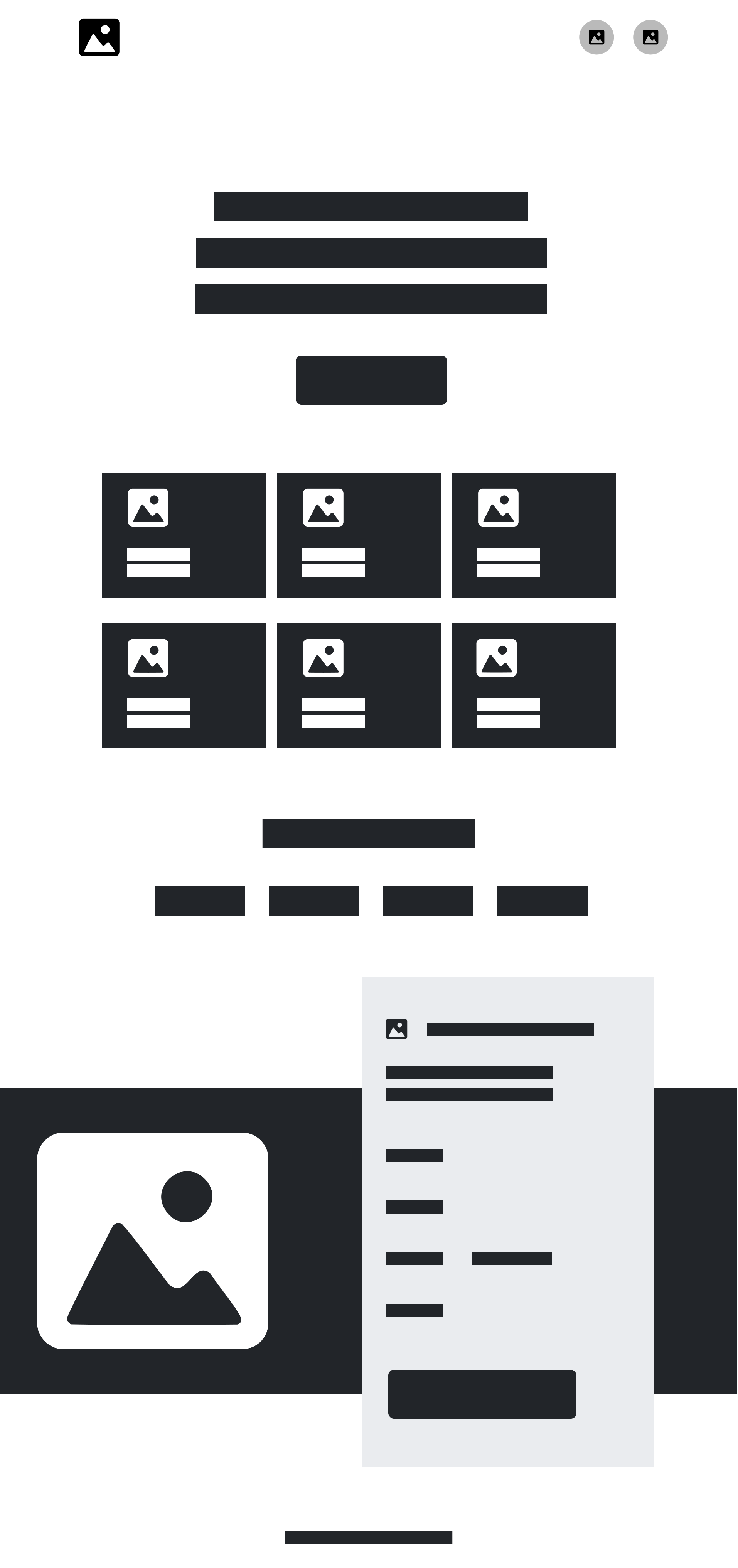
During the early design phase (When), I created low-fidelity wireframes (What) for Top Creative using Figma (How) to plan layouts, content flow, and user interactions (Why). The work focused on structure, navigation, and accessibility across core pages, all designed independently by me (Who/Where) to validate decisions before moving to high-fidelity designs.
Prototype
Concept Realization
After wireframes
ProcessClickable prototypes built after high-fidelity wireframes
Figma
ToolUsed interactive links and transitions for core pages
Homepage, services, about, contact
CoverageCore screens simulated for realistic interactions
Validate user flow
PurposeEnsure clarity of interactions and visual hierarchy
Interactive testing
MethodTested transitions and interaction flows for feedback
Created by me
OwnerEnd-to-end prototype creation and testing
Prototypes
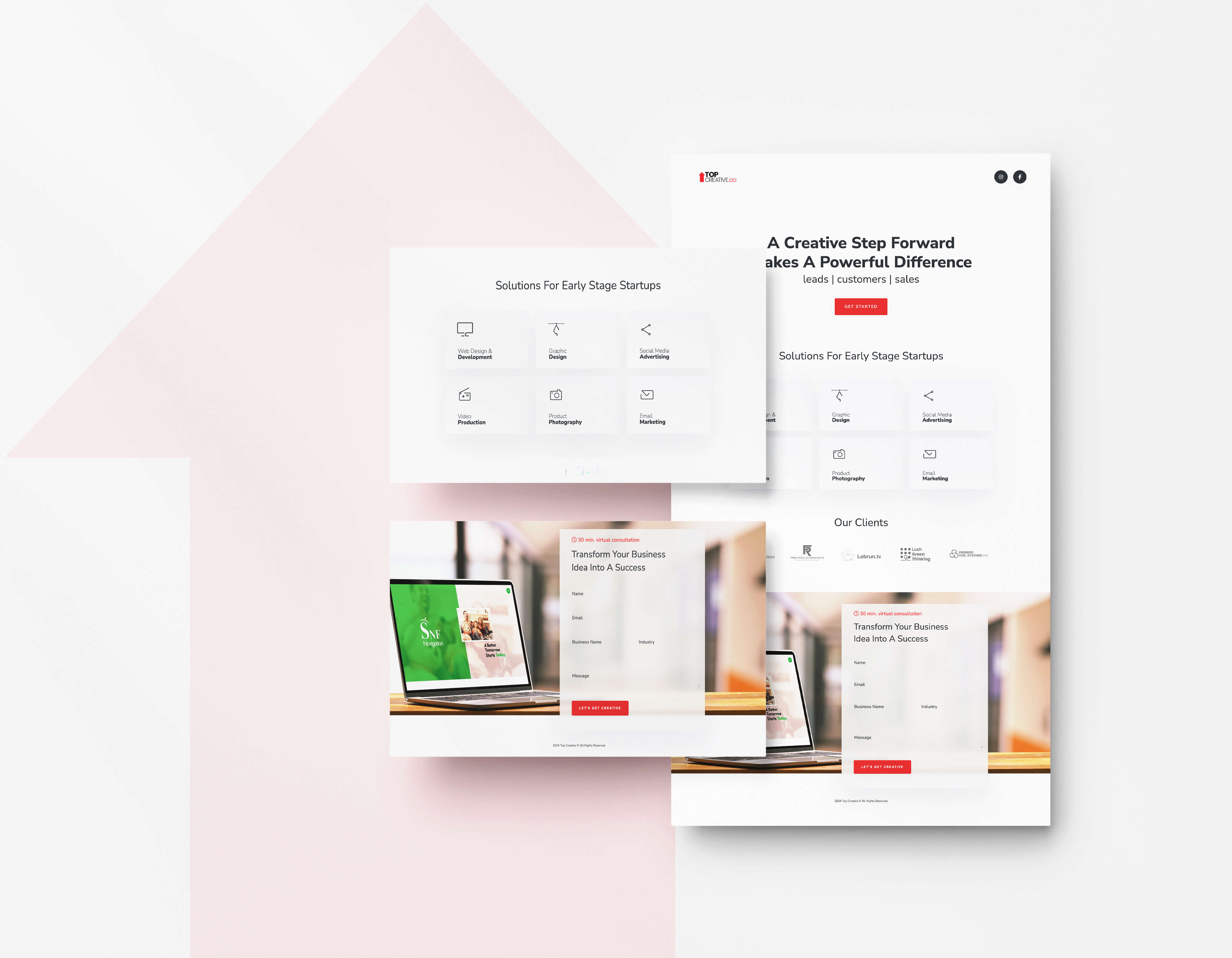
For Top Creative, clickable prototypes (What) were built in Figma (How) after finalizing high-fidelity wireframes (When) to simulate user interactions (Why). This helped visualize flows and hierarchy, allowing the team to validate decisions (Who) across core pages including homepage, services, about, and contact (Where).